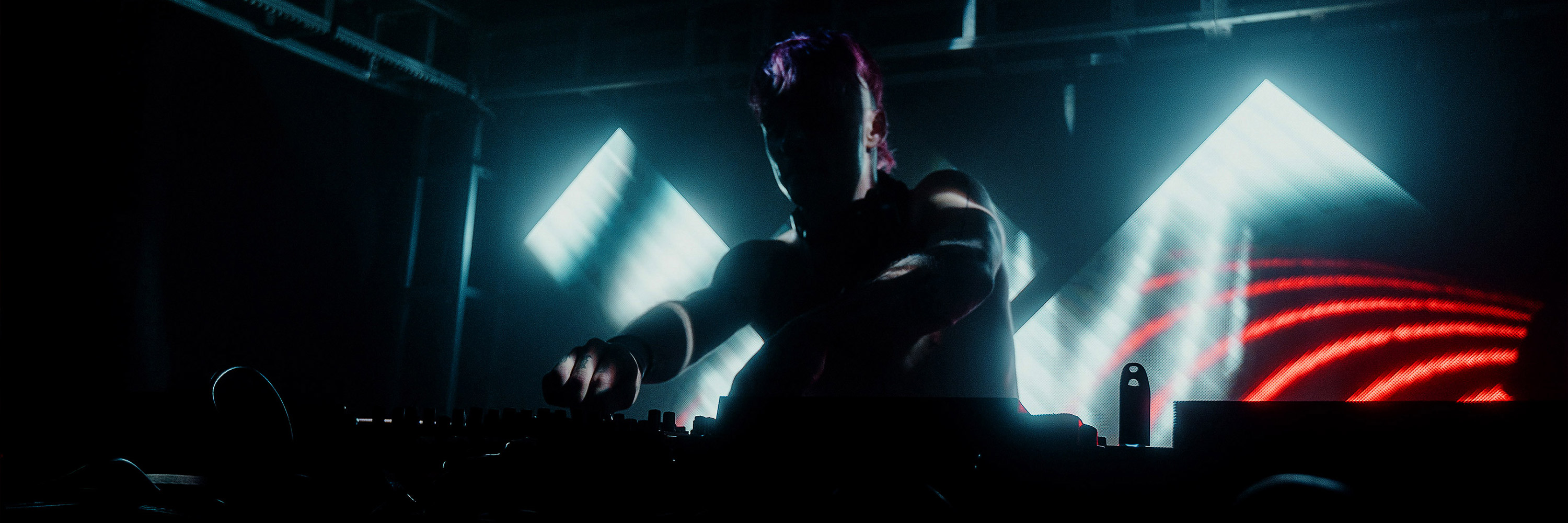

Resolume 7.28 Release 🚀 Background Removal 👤 Depth Estimation
Version 7.28.0 brings computer vision into Resolume. In Wire we're introducing new low-level building blocks with two new nodes, Human Segmentation and Depth Estimation. In Arena & Avenue you'll find fun new effects and a blend mode built on those nodes: Background Removal, Depth Estimation, Depth Blur, Depth Field, Depth Displace, Depth Pixelation, Depth Shift and Depth blend mode.
Background Removal
Uses a human-segmentation model to separate the subject from the background. You can output the mask, invert it, smooth the edges and clean up the mask boundaries to tidy up the result.
Depth Estimation
Generates a depth map from a 2D image. Includes temporal filtering and smoothing to reduce flickering between frames.
Depth Blur
A soft, depth-of-field blur. Pick what stays in focus and watch everything closer or farther melt into bokeh, with bright spots rounding into glowing discs. Works on any clip, since depth is captured live from the input.
Depth Field
A two-stage depth effect. Ghost desaturates, dims and optionally inverts the picture so it recedes into the background. Xray then highlights a glowing slab at a chosen depth, which you can slide through the scene to pick out whatever is at that distance. Pair Ghost (background suppression) with Xray (foreground reveal) for a depth-driven X-ray look.
Depth Displace
A depth-driven displacement warp. Internal noise bends the source image, and depth decides where the warp bites, through a focused Slice you can sweep across the scene. Falloff curves the onset, Min and Max set the strength, and the noise's Detail and Speed shape the motion. Think underwater ripple, glitch-shimmer, or a dreamy melt.
Depth Pixelation
A depth-driven pixelation effect. Block size varies with depth, so distant areas read chunky while near areas stay sharp.
Depth Shift
Creates a parallax effect by slicing the image into depth layers and shifting each one, closer layers shift more than distant ones, so you get 3D parallax out of a flat 2D image. Optional Colorize tints the layers by depth and can outline the edges for a graphic, cut-paper look.
Depth Blend Mode
Mixes two layers by their depth maps instead of by opacity, for scene-aware compositing. A subject from one layer can sit naturally among the depths of another. Flip Depth chooses whether near or far content comes in first, Granularity and Smooth shape the mask, and a Temporal Filter reduces per-frame flicker.
It's all Wire under the hood
Every effect and the Depth blend mode are Wire patches. Open them up to tweak the models, rework the controls, or build your own effects from the Human Segmentation and Depth Estimation nodes. Have fun!
Group FFT for Clip and Layer Parameters
You can now select the group for the source of FFT parameter animations on layers and clips when they are inside a group.
MIDI & OSC Monitor Improvement
Select one or multiple messages in the MIDI or OSC monitor and you can copy them. This is especially handy when you need a long OSC address.
Right-click to Default in Wire
Bring your muscle memory from Arena to Wire 💪 If you're used to resetting a parameter to default by right-clicking it in Arena or Avenue, then you can now do the same on inlets and parameters in Wire.
A Blast from The Past
Remember that we released Resolume AI integration for Claude & ChatGPT via MCP earlier this year in version 7.26? Well, it was received with mixed emotions in the Resolume Community. Not everybody likes AI and we get that, there is a lot of hype and controversy surrounding it. But those who do like it, find it a huge boost in productivity.
Long time Arena user Vince wrote to us: Guysssss I just used the MCP for the first time and oh. my. god. does it save me days of time. When I build shows - I have to change endless amounts of clip colors for my drums, it just did it all in one pass. 5 minutes - would been a days work of programming. This MCP work is just AMAZING.
Up Next!?
We're currently improving our audio engine and the first thing is FFT audio reactivity in Arena. In Wire we're implementing a whole lot of new audio spectrum features and path drawing so you can build audio reactive visualizations in Wire. And the next release (7.29), will also include a few new slice effects so stay Tuned!
Background Removal
Uses a human-segmentation model to separate the subject from the background. You can output the mask, invert it, smooth the edges and clean up the mask boundaries to tidy up the result.
Depth Estimation
Generates a depth map from a 2D image. Includes temporal filtering and smoothing to reduce flickering between frames.
Depth Blur
A soft, depth-of-field blur. Pick what stays in focus and watch everything closer or farther melt into bokeh, with bright spots rounding into glowing discs. Works on any clip, since depth is captured live from the input.
Depth Field
A two-stage depth effect. Ghost desaturates, dims and optionally inverts the picture so it recedes into the background. Xray then highlights a glowing slab at a chosen depth, which you can slide through the scene to pick out whatever is at that distance. Pair Ghost (background suppression) with Xray (foreground reveal) for a depth-driven X-ray look.
Depth Displace
A depth-driven displacement warp. Internal noise bends the source image, and depth decides where the warp bites, through a focused Slice you can sweep across the scene. Falloff curves the onset, Min and Max set the strength, and the noise's Detail and Speed shape the motion. Think underwater ripple, glitch-shimmer, or a dreamy melt.
Depth Pixelation
A depth-driven pixelation effect. Block size varies with depth, so distant areas read chunky while near areas stay sharp.
Depth Shift
Creates a parallax effect by slicing the image into depth layers and shifting each one, closer layers shift more than distant ones, so you get 3D parallax out of a flat 2D image. Optional Colorize tints the layers by depth and can outline the edges for a graphic, cut-paper look.
Depth Blend Mode
Mixes two layers by their depth maps instead of by opacity, for scene-aware compositing. A subject from one layer can sit naturally among the depths of another. Flip Depth chooses whether near or far content comes in first, Granularity and Smooth shape the mask, and a Temporal Filter reduces per-frame flicker.
It's all Wire under the hood
Every effect and the Depth blend mode are Wire patches. Open them up to tweak the models, rework the controls, or build your own effects from the Human Segmentation and Depth Estimation nodes. Have fun!
Group FFT for Clip and Layer Parameters
You can now select the group for the source of FFT parameter animations on layers and clips when they are inside a group.
MIDI & OSC Monitor Improvement
Select one or multiple messages in the MIDI or OSC monitor and you can copy them. This is especially handy when you need a long OSC address.
Right-click to Default in Wire
Bring your muscle memory from Arena to Wire 💪 If you're used to resetting a parameter to default by right-clicking it in Arena or Avenue, then you can now do the same on inlets and parameters in Wire.
A Blast from The Past
Remember that we released Resolume AI integration for Claude & ChatGPT via MCP earlier this year in version 7.26? Well, it was received with mixed emotions in the Resolume Community. Not everybody likes AI and we get that, there is a lot of hype and controversy surrounding it. But those who do like it, find it a huge boost in productivity.
Long time Arena user Vince wrote to us: Guysssss I just used the MCP for the first time and oh. my. god. does it save me days of time. When I build shows - I have to change endless amounts of clip colors for my drums, it just did it all in one pass. 5 minutes - would been a days work of programming. This MCP work is just AMAZING.
Up Next!?
We're currently improving our audio engine and the first thing is FFT audio reactivity in Arena. In Wire we're implementing a whole lot of new audio spectrum features and path drawing so you can build audio reactive visualizations in Wire. And the next release (7.29), will also include a few new slice effects so stay Tuned!
Resolume Blog
This blog is about Resolume, VJ-ing and the inspiring things the Resolume users make. Do you have something interesting to show the community? Send in your work!